

Gender and Livestock in India: Developing Research Strategies and Approaches for Greater Inclusion
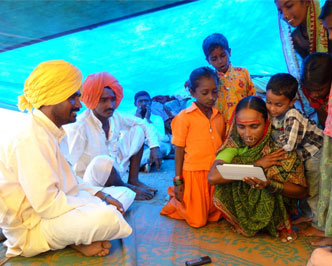
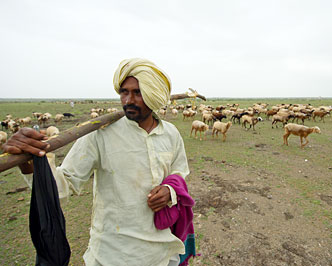
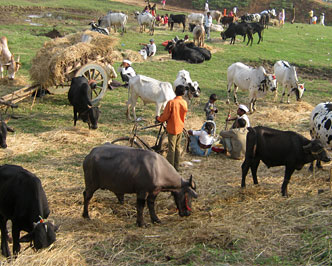
For several years ANTHRA has been working on issues concerned with gender concerns of different livestock rearing communities . Through different projects and programmes we have reached out to several thousand households and brought visibility to pastoralism and small livestock holders who are otherwise forgotten or missed by mainstream development programmes. Our work on Maternal and Child Health amongst nomadic pastoralist women has brought focus to a poorly researched area both in India and abroad. Education for migratory communities is another area we have attempted to work with exploring hitherto unexplored areas of education , mobile education , knowledge transfer and sharing as well as the use of new and modern technology such as mobile phones .
In September 2019 prior to the state elections in Maharashtra , India we assisted pastoral groups in drafting a Manifesto where they articulated their concerns and what they requested from the state.This manifesto was widely shared throughout the state and even across the country and abroad with other groups working on similar concerns. However , the voice of women from these communities was not as loud as it should have been because it was difficult to draw women out from the shadows to articulate their needs. Since then we have been continuosly working with different womens groups rearing livestock helping them articulate their lives and livelihoods in the larger context of change and shifting landscapes.
In March 2023 we hosted a national workshop where the need to develop research approaches which take into account the gender concerns as well as the specific concerns of livestock rearing communities especially women from nomadic pastoralist communities was highlighted . Also highlighted was the additional layer of complexities in India with the diversity of communities who have unique relationships to their land and livestock as well as within their communities.
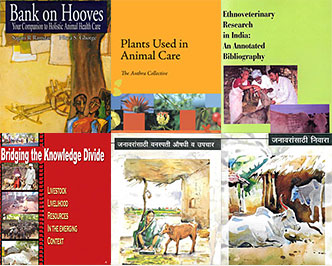
We are constantly working to collaborate with others who are working on similar issues , develop our own resources and skills and share them widely with a larger audience .
In 2026 the International Year of Women Farmers and the International Year of Rangelands and Pastoralism we are happy to have helped support the global gathering of pastoralist women and contributed to the development of the Kathmandu Declaration . We have also contributed to a paper in the Indian Journal of Gender studies .
However, there is much more to be done.